

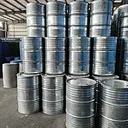
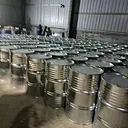
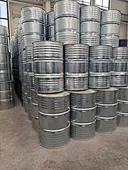
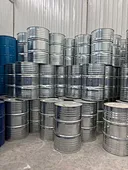
Model No: JT00031
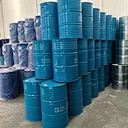
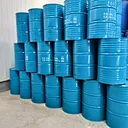
Isooctyl Alcohol
Isooctyl Alcohol, a colorless, transparent liquid with a mild odor, is a versatile chemical intermediate widely used in various industries.Our high-purity isooctyl alcohol meets strict industry standards, ensuring reliability for industrial production. Whether for chemical synthesis or manufacturing processes, it delivers consistent quality to support your production needs. Contact us for bulk supply and technical support.
minimum order :
1
Supply Ability :
100T / Week
Stock Time :
30Day
Country of Origin :
China
Quantity :
US $0.98 - US $1.25
CAS NO. | 26952-21-6 |
Physical and chemical properties | Soluble in water and common organic solvents such as ethanol and diethyl ether. |
Appearance | colourless transparent liquid |
Grade | Industrial-grade |
Odor | Possessing a distinctive odour of alcohol |
Applications | Raw materials for the preparation of chemicals |
Density | 0.832 |
Main Applications
1. Plasticizer Manufacturing (Core Basic Application)
This is the core application area of Isooctyl Alcohol, accounting for over 60% of its total consumption and serving as the core pillar of revenue for Isooctyl Alcohol suppliers. As a key raw material, Isooctyl Alcohol is widely used to synthesize mainstream plasticizers such as diisooctyl phthalate (DOP/DIOP), triisooctyl trimellitate (TOTM), and diisooctyl terephthalate (DOTP)—all of which rely on Isooctyl Alcohol’s structural stability and reactivity. These plasticizers, derived from Isooctyl Alcohol, directly connect to three major essential sectors:
PVC Products: Isooctyl Alcohol-based plasticizers enhance PVC’s flexibility, heat resistance, and processing performance, making them ideal for wire and cable insulation, flooring materials, artificial leather, and wallpaper. Manufacturers prioritize Isooctyl Alcohol for its ability to maintain product integrity under harsh conditions.
Automotive Industry: Isooctyl Alcohol-derived plasticizers are used in automotive interior materials (improving tactile feel and durability) and seals (enhancing weather resistance and anti-aging capabilities). The automotive sector values Isooctyl Alcohol for its role in meeting strict quality and safety standards.
Medical Devices: Isooctyl Alcohol-based plasticizers are suitable for flexible tubing (infusion tubing, urinary catheters) and medical packaging, as Isooctyl Alcohol complies with medical-grade safety requirements, ensuring biocompatibility and low toxicity.
2. Surface Treatment and Coating Industry (High Value-Added Applications)
Isooctyl Alcohol excels as a high-performance solvent, pigment dispersant, and additive in the surface treatment and coating industry. Although its consumption share here is lower than in plasticizer manufacturing, Isooctyl Alcohol offers significant added value due to its ability to improve product performance. Downstream applications of Isooctyl Alcohol in this sector cover multiple niche scenarios:
Industrial Coatings: Isooctyl Alcohol is suitable for automotive coatings, engineering machinery coatings, and industrial maintenance coatings. It reduces coating viscosity, adjusts drying rate, and enhances surface gloss and smoothness—key benefits that make Isooctyl Alcohol a preferred choice for formulators. Isooctyl Alcohol also exhibits high compatibility with acrylic, polyurethane, and epoxy resins, expanding its utility.
Specialty Inks: As a critical formulation component, Isooctyl Alcohol optimizes pigment dispersibility, improves printability, and ensures color stability. Isooctyl Alcohol is widely used in specialty printing for packaging, textiles, and electronics, where precision and durability are paramount.
Surface Cleaning: Isooctyl Alcohol is a key ingredient in electronic equipment cleaning agents (offering low residue and no corrosion to precision components) and metal surface pretreatment agents (enhancing coating adhesion). Industries rely on Isooctyl Alcohol for its gentle yet effective cleaning properties.
3. Lubricating Oils and Fuel Additives (Growth-Oriented Applications)
Isooctyl Alcohol serves as a key raw material for synthetic ester-based lubricating oil base oils, viscosity index improvers, and diesel flow improvers—driving growth in sectors like the automotive aftermarket, industrial machinery, and new energy vehicles. The demand for Isooctyl Alcohol in this area is rising due to its ability to enhance product efficiency and performance:
Lubricating Oil Sector: Isooctyl Alcohol is used to produce synthetic ester-based base oils, which are essential for high-end lubricating oils. These base oils, derived from Isooctyl Alcohol, improve viscosity index, enhance low-temperature fluidity, and boost oxidation resistance—critical for new energy vehicles that require high-performance lubrication. Manufacturers trust Isooctyl Alcohol to meet the rigorous demands of modern machinery.
Fuel Sector: Isooctyl Alcohol-based diesel flow improvers prevent low-temperature crystallization, ensuring reliable fuel supply in winter. Additionally, Isooctyl Alcohol is used in gasoline detergents to reduce engine carbon deposits and improve fuel efficiency, making Isooctyl Alcohol a valuable additive for sustainable fuel solutions.
4. Cosmetics and Personal Care Products (High-Barrier, High-Profit Applications)
Leveraging its low irritation and excellent skin compatibility, Isooctyl Alcohol is a safe and gentle solvent and emulsifier in the cosmetics and personal care industry. Isooctyl Alcohol’s unique properties make it suitable for a wide range of beauty products, where safety and performance are equally important:
Makeup: Isooctyl Alcohol is used in nail polish (improving film-forming properties and shine), perfume (enhancing fragrance longevity), and hairspray (providing flexible hold). Formulators prefer Isooctyl Alcohol for its ability to blend seamlessly with other ingredients while delivering desired results.
Skincare: As an emulsifier and solvent, Isooctyl Alcohol promotes the absorption of active ingredients (such as vitamins and antioxidants) without leaving a greasy residue. Isooctyl Alcohol is a key component in lotions, creams, and serums, catering to consumer demand for lightweight, effective products.
Other Categories: Isooctyl Alcohol is compatible with deodorants and antiperspirants, improving formula stability and skin compatibility. Its gentle nature makes Isooctyl Alcohol a staple in sensitive-skin products.
5. Specialty Chemical Intermediates (Future Growth Engine )
Isooctyl Alcohol acts as a versatile intermediate for synthesizing high-value-added derivatives, expanding its reach into textiles, agriculture, and oil extraction. The versatility of Isooctyl Alcohol allows it to be transformed into a range of products that address niche market needs:
Core Derivatives: Isooctyl Alcohol is used to produce isooctyl ester surfactants (for detergents and emulsifiers), isooctyl acrylate (for adhesives and textile auxiliaries), and isooctylamine compounds (for pesticide emulsifiers and oil extraction chemicals). Each derivative leverages Isooctyl Alcohol’s structural advantages to deliver specific performance benefits.
Downstream Applications: Isooctyl Alcohol-derived textile auxiliaries (softeners, antistatic agents) improve fabric quality and comfort. In agriculture, Isooctyl Alcohol-based pesticide emulsifiers enhance dispersibility and efficacy, ensuring targeted pest control. In oil extraction, Isooctyl Alcohol-derived chemicals (demulsifiers, corrosion inhibitors) optimize extraction processes and protect equipment.


