

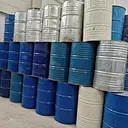


Model No: JT00016
Acetic acid
Acetic acid (chemical formula: C₂H₄O₂), also known as glacial acetic acid, is anhydrous acetic acid. At room temperature, it is a colorless, transparent liquid with a strong, pungent odor. Its freezing point is 16.6°C, and it readily solidifies into an ice-like form at low temperatures, hence its name.
minimum order :
1
Supply Ability :
100T / Week
Stock Time :
30Day
Country of Origin :
China
Quantity :
US $0.35 - US $0.62
| CAS NO. | 64-19-7 |
| Physical and chemical properties | Soluble in water, ethanol, ether, carbon tetrachloride, and other organic solvents, but insoluble in carbon disulfide. |
| Appearance | Colorless transparent liquid that solidifies into ice-like crystals at low temperatures. |
| Grade | Industrial Food-grade |
| Odor | has a pungent odor |
| Applications | Acidity regulator |
| Density | 1.049 g/mL at 25 °C |
Main Applications
1. Synthetic Fibers and Textile Dyeing
Cellulose Acetate: Glacial acetic acid is a key raw material for producing cellulose acetate. Cellulose acetate is widely used in manufacturing acetate fiber (rayon), film, and plastic sheet substrates, offering excellent luster, softness, and antistatic properties.
Dyes and Intermediates: In dye synthesis, glacial acetic acid frequently serves as a reaction medium and catalyst, facilitating key reactions such as coupling and condensation to enhance yield and selectivity.
Textile Printing and Dyeing: As a pH adjuster and neutralizing agent, glacial acetic acid precisely controls the acidity or alkalinity of dye baths. This facilitates uniform adsorption and fixation of reactive dyes, acid dyes, and other pigments onto fibers, ensuring vivid colors, high fastness, and long-lasting results.
2. Synthetic Chemistry and Materials Industry
Vinyl Acetate Monomer (VAM): This represents the largest single application for glacial acetic acid. VAM, produced by reacting glacial acetic acid with ethylene, serves as a crucial base material for synthesizing polyvinyl acetate (PVA) emulsions, ethylene-vinyl acetate copolymers (EVA), and polyvinyl alcohol (PVOH). These materials find extensive use in adhesives, coatings, construction sealants, and laminated safety glass.
Terephthalic Acid (PTA): In the production of purified terephthalic acid, glacial acetic acid serves as a solvent supporting the oxidation reaction of para-xylene. PTA is the core monomer for polyesters (e.g., polyester fibers, PET plastic bottles), underpinning the development of synthetic fiber and packaging material industries.
3. Food Industry (Food Additive Applications)
Acidity Regulator: Food-grade glacial acetic acid is a primary component in vinegar formulation, precisely controlling pH levels in food systems to enhance taste and stability.
Flavor Enhancer and Preservative: Leveraging its natural acidity and antimicrobial properties, it is widely used in condiments, sauces, pickled foods, and baked goods to intensify flavor while extending shelf life.
4. Other Specialized Applications
Solvent Applications: Glacial acetic acid serves as a highly effective polar solvent suitable for dissolving inks, paints, resins, and formulating pesticide preparations, offering excellent solubility and volatility.
Household Cleaning: Diluted glacial acetic acid effectively removes limescale, soap scum, and mineral deposits, providing an eco-friendly, biodegradable household cleaning solution.
Rubber Industry: In natural rubber processing, glacial acetic acid serves as a coagulant for latex, promoting rubber particle precipitation to facilitate subsequent molding and processing.