Model No: JT00004

Ethylene glycol Industrial grade Polyester grade

Ethylene glycol is a vital petrochemical feedstock and basic chemical. At standard temperature and pressure, it exists as a colourless, odourless, viscous liquid with a sweet taste. It can undergo oxidation to form various products, such as ethylene glycol aldehyde, glycolaldehyde, glycolic acid, and oxalic acid.
minimum order :
1 barrel
Supply Ability :
100Tbarrel / Week
Stock Time :
30Day
Country of Origin :
China
Quantity :
US $133.00 - US $165.00 / barrel
add to cart
Contact Now

CAS NO.

107-21-1

Packaging Specifications

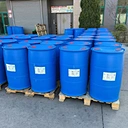
230kg per drum; tonne drum

Appearance 

Colourless transparent liquid

Grade

Industrial grade; Polyester grade

Odor

No peculiar odour

Applications

Antifreeze and coolant raw materials

Density

1113.3kg/m3


Main Applications

Automotive Engine Coolant (Antifreeze)

Typically formulated by blending Ethylene glycol or propylene glycol with water, supplemented with multifunctional additives such as preservatives, rust inhibitors, and defoamers to create high-performance Antifreeze. This Antifreeze formulation, with it as the core component, delivers long-lasting protection—it ensures the Antifreeze offers reliable freeze protection, boil-over prevention, corrosion resistance, and scale inhibition. Its unique thermal properties make this Antifreeze widely employed in various internal combustion engine vehicles, as it enables the Antifreeze to maintain stability even under extreme temperatures, ensuring consistent engine operation. Choosing Antifreeze with high-purity Ethylene glycol is critical for extending engine lifespan, as it directly impacts the Antifreeze’s thermal conductivity and anti-corrosive efficacy. Moreover, high-quality Antifreeze with premium it can also reduce maintenance costs by minimizing engine wear related to temperature fluctuations, making Antifreeze a cost-effective protective solution for vehicle engines.

De-icing Fluid

Many high-performance de-icing fluids incorporate Ethylene glycol as a key ingredient, leveraging its freeze-point depression properties to prevent ice accumulation—similar to how it functions in Antifreeze. These de-icing fluids share core anti-freeze mechanisms with Antifreeze, making them a specialized extension of Antifreeze technology. They are primarily employed for de-icing aircraft fuselages and runways to prevent ice accumulation compromising flight safety, with it ensuring rapid ice melting and long-lasting anti-icing effects. Additionally, it is a core component in automotive windscreen washer fluid formulated as a type of Antifreeze, where it effectively prevents the fluid from freezing in low temperatures, maintaining clear driving visibility. Compared to other de-icing agents, Ethylene glycol-based solutions, including Antifreeze and its derivatives, offer superior safety and compatibility, making them a preferred choice for both aviation and automotive de-icing applications related to Antifreeze functionality.

Synthetic Fibre (Commonly Known as ‘Polyester’ in China)

While polyester production is centered on polyethylene terephthalate (PET), Ethylene glycol is a critical raw material in PET synthesis—without high-purity Ethylene glycol, high-quality polyester fibres cannot be produced. This represents the largest application area for polyethylene terephthalate (PET), with Ethylene glycol ensuring the polymer’s structural integrity. Polyester fibres, prized for their high strength, excellent elasticity, heat and abrasion resistance, wrinkle resistance, non-iron properties, and dimensional stability (attributes influenced by the quality of Ethylene glycol used), are extensively utilised in apparel fabrics, home textiles (such as bedding and curtains), and industrial fabrics (including tyre cord, conveyor belts, and filtration materials). The reliability of Ethylene glycol supply directly impacts the polyester industry’s production efficiency and product quality, making Ethylene glycol a cornerstone of the synthetic fibre sector.

Polyester Preforms

Ethylene glycol is an indispensable raw material for producing the polyethylene terephthalate (PET) used in polyester preforms—Ethylene glycol’s purity directly determines the transparency and mechanical properties of the final PET product. These preforms, melt-extruded from Ethylene glycol-derived PET into highly transparent forms, are used in blow moulding to produce packaging containers such as beverage bottles, mineral water bottles, cooking oil bottles, and condiment bottles. The Ethylene glycol-based PET preforms offer superior transparency, strong gas barrier properties, lightweight durability, shatter resistance, and recyclability—advantages that stem from the consistent quality of Ethylene glycol in the synthesis process. As a result, Ethylene glycol-derived polyester preforms are a mainstream material in food and beverage packaging, with Ethylene glycol supply chain stability critical for the packaging industry’s operations.

Polyester Film

Polyester film, primarily biaxially oriented polyester film (BOPET), is produced from PET synthesised using Ethylene glycol as a key monomer. Ethylene glycol contributes to the film’s outstanding mechanical strength, electrical insulation, heat resistance, and optical properties—core attributes that make BOPET film versatile. Ethylene glycol’s role in ensuring PET’s molecular uniformity directly impacts the film’s dimensional stability and barrier performance. Widely employed in functional applications including flexible food packaging, pharmaceutical packaging, electrical insulation for electronic components (e.g., motors, transformers, cables), magnetic tapes, film substrates, and solar backsheet films, polyester film’s performance reliability is closely tied to the quality of Ethylene glycol used. The growing demand for high-performance polyester film has further boosted the demand for high-purity Ethylene glycol in this sector.

Chemical Intermediates

Ethylene glycol is a versatile building block for synthesising numerous chemical intermediates, with its reactivity enabling the production of diverse high-value compounds. Ethylene glycol can be synthesised into ethylene glycol ether compounds, a class of highly efficient solvents widely used in paints, inks, coatings, and cleaning agents—these ethers inherit Ethylene glycol’s excellent solvency and low toxicity. Additionally, Ethylene glycol is employed in the production of unsaturated polyester resins (UPR), which are then combined with glass fibre to form fibreglass-reinforced plastic (FRP) for applications in shipbuilding, automotive manufacturing, construction materials, and wind power equipment. Beyond these, Ethylene glycol is used in the manufacture of fine chemicals such as lubricants, plasticisers, and surfactants, where Ethylene glycol’s chemical structure provides the necessary functional groups for product performance. Unlike its role in Antifreeze, where it focuses on freeze protection, Ethylene glycol here acts as a core intermediate, driving innovation in the fine chemical industry. It’s worth noting that the purity requirements for Ethylene glycol in chemical intermediates may differ from those in Antifreeze, but both applications rely on Ethylene glycol’s stable chemical properties.

Solvent

In specific industrial sectors, certain Ethylene glycol derivatives serve as excellent solvents, leveraging Ethylene glycol’s inherent solvency and chemical stability. These Ethylene glycol-based solvents are widely used in industries including coatings, plastics processing, and printing inks, where they exhibit strong dissolving power, moderate volatility, and relatively high safety characteristics—advantages that make them superior to many traditional solvents. Ethylene glycol’s ability to dissolve both polar and non-polar compounds makes its derivatives highly versatile, while Ethylene glycol’s low toxicity ensures compliance with modern environmental and safety standards. Unlike its freeze-protection role inAntifreeze, Ethylene glycol here contributes to efficient material processing and formulation stability, highlighting its multi-functional nature. Some of these Ethylene glycol derivatives are even used in formulating auxiliary components for Antifreeze, enhancing the overall performance and stability ofAntifreeze products.

Natural Gas Dehydrating Agent

Leveraging Ethylene glycol’s potent hygroscopic properties—another key attribute distinct from its Antifreeze functionality—Ethylene glycol is extensively employed in natural gas processing to remove water vapour. Ethylene glycol’s ability to absorb large amounts of water makes it ideal for this application, as it prevents hydrate formation and blockages within transmission pipelines under low-temperature, high-pressure conditions. Ethylene glycol ensures the safe and stable operation of long-distance natural gas pipelines, with the dehydration process using Ethylene glycol being both mature and highly efficient. This process stands as one of the standard dehydration techniques in oil and gas fields, with Ethylene glycol’s reliability and recyclability (through regeneration processes) making it a cost-effective and environmentally friendly solution. The oil and gas industry relies heavily on consistent Ethylene glycol supply to maintain uninterrupted natural gas transmission. Interestingly, Ethylene glycol’s ability to perform well in low-temperature environments is a shared advantage between this application and Antifreeze, though Antifreeze focuses on preventing freezing rather than dehydrating.
